This transcript was generated from the episode audio and may contain minor errors.
[Music]
How do you determine a customer's emotional needs? Today's listener is inspired to learn more about the core emotional needs of a potential customer, but they're not sure how to do it or what to do with the info. Like, are these needs always the same? Does everyone have the same emotional needs? And what am I talking about when I say core emotional needs?
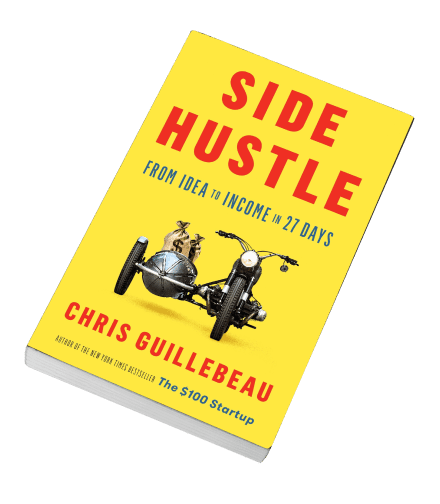
Well, I've been writing about this topic for quite a while way back in the $100 startup and then the book "Side Hustle." I went into it in some detail. I think it's worth paying attention to because if you have a good understanding of the truly emotional need that your product or service meets, not just a practical or a logistical need, and then you go all in with crafting your copy and other messaging around it, it can make a big difference. So I'm gonna give a couple of examples in my answer if you're still like, I don't get it, what is an emotional need and how does that relate to me creating my product or my service? As I said, some examples might help. So let's hear the question from Luke in my answer, how do you determine a customer's emotional needs and why does this matter?
That's our topic for today. Welcome to "Side Hustle School." Stay tuned. [Music]
Hi, Chris. This is Luke from Portland. Hope the start of the year is going as well as possible for you.
I've been listening to the show for a couple of years and I'm still enjoying the stories, puns, and advice. You often mention how important it is to be aware of a consumer's emotional needs. This makes sense, but I'm not always sure what to do with it. How do I discover what those emotions are for a product? Or how about a service like bookkeeping?
Are they always the same? Lastly, once I understand what the emotional needs are, how does that affect what I do next? Any help putting together the puzzle pieces would be appreciated. Thanks. [Music]
Luke, it is a thought process.
It is a skill you acquire through practice. It's like learning the power of observation, which I talk about from time to time. You kind of start noticing what are problems? What are inefficiencies? What are things that could be done better?
What is something I could do, perhaps, to provide a solution or a better way of life? Or just something that helps in some way? And could that be my next product or service or something that I offer? It's also kind of like this principle of improv, yes and, where you're like, okay, I have to build on each thing as it goes. Except in this case, it's a little bit backwards.
You work from the other direction. If you think about anything that is for sale, anything at all, ask yourself what need does it meet on the surface and then go back a step until you get to the fundamental root level. So I promise you some examples. Bookkeeping, on the one hand, it's kind of a basic service. It's boring, no disrespect to any bookkeepers out there.
But having your taxes done properly and not getting audited, that's actually a very good thing. So getting audited, let's say, is not boring. It's stressful. Not knowing the state of your business because your bookkeeping or your accounting is poor, that produces anxiety. So the core emotional need a bookkeeper provides is relief.
And I think that's how they should market themselves. Like, you don't want to mess with this stuff, but you know you need to do something about it. Leave it to me. That's a much more effective marketing message than just like, hey, I'm a bookkeeper, hire me to keep your books. What about the row of snacks at the grocery store?
Like, they don't just say calories on them. They're not just generic packaging. The need that snacks meet is not just hunger. It could be good for you and tastes great too. Okay, great.
That satisfies my need to feel like I'm eating healthy along with a desire to not punish myself when doing so. It could be nostalgia. It could be comfort. Maybe there's a picture of a family on the box or maybe something of nature. You know, the grocery industry is a great place to go and study messaging because it's such a competitive industry.
So the products that survive are usually doing something right. So there's a couple of examples, bookkeeping and groceries, non-sexy categories, but yet you can see how deeply felt those emotional needs can be. So surely you can find the answer for your idea. Remember to keep working backwards. You've got the practical solution and then just what does that actually do for people?
How does it make them feel? And once you've found it, play it up. Don't be afraid to mark it to an emotional need. It can be very effective. All right, that's it for today.
We're also coming to the end of a month here, episode 3,468 of the podcast. But tomorrow begins a new month, a new set of episodes, seven days a week. We're gonna be here. You can trust and rely that the show will be here for you. I hope you'll continue to listen, subscribe, follow wherever you get your podcasts.
My name's Chris Guillebeau. You're listening to Side Hustle School. [Music]